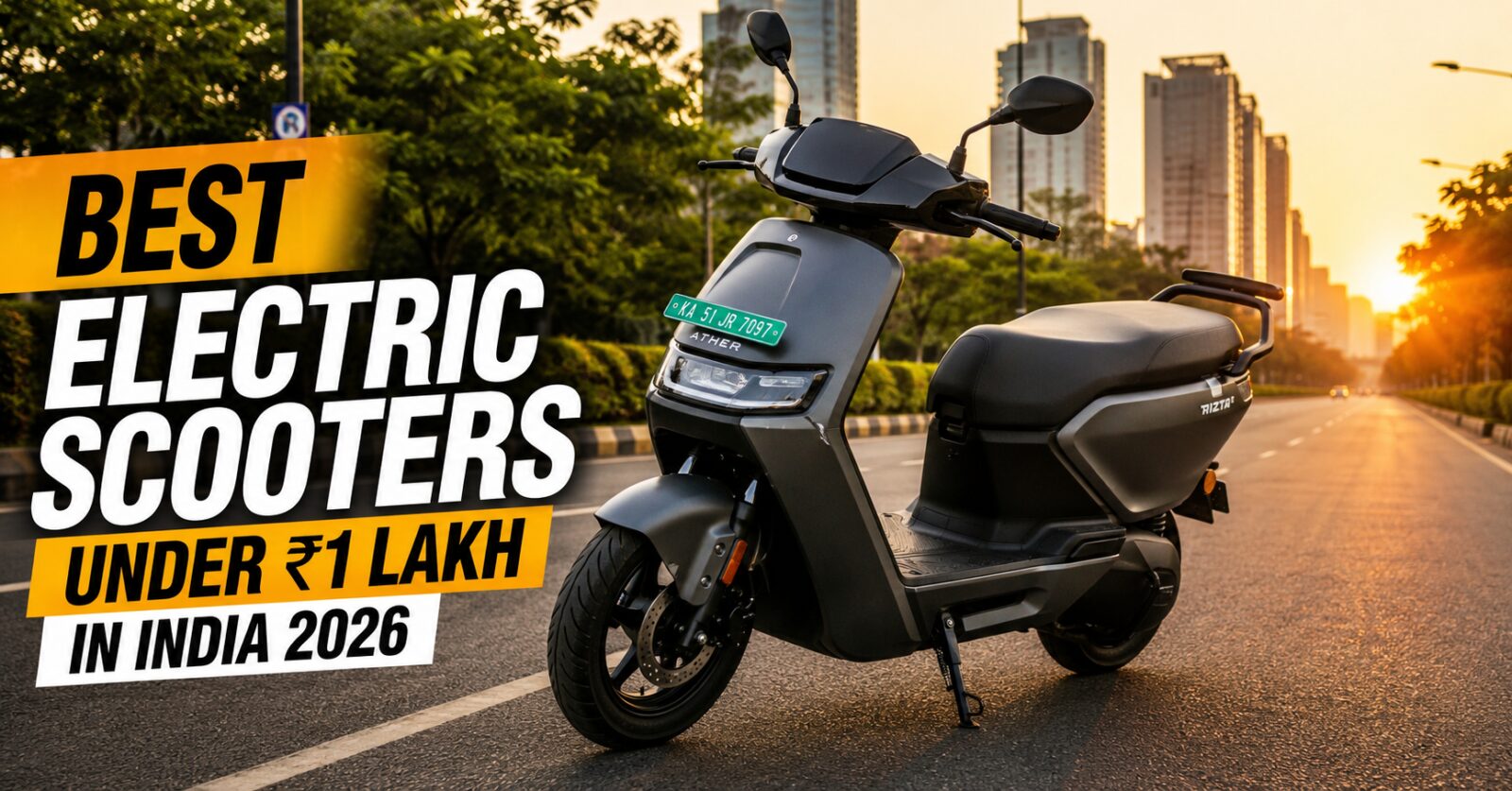
Best Electric Scooters Under ₹1 Lakh in India 2026 — Top Picks That Are Actually Worth Buying
Here’s something that will make you do the math real fast.
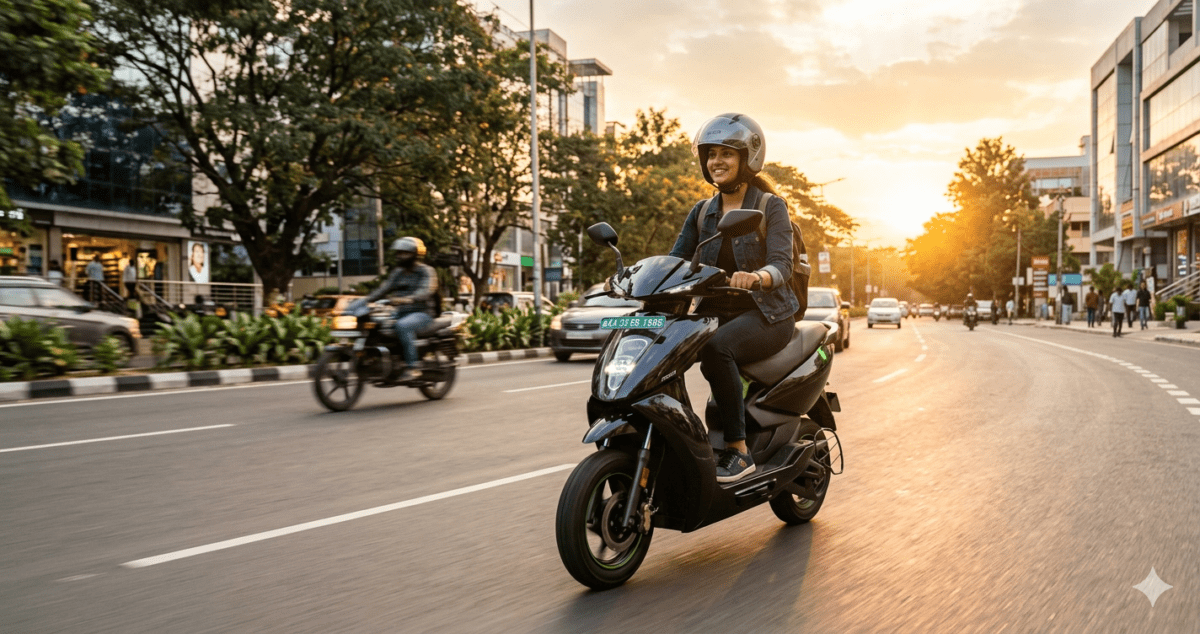
A petrol scooter at 45 kmpl, with fuel at ₹105/litre, costs you roughly ₹2.33 per kilometre to run. An electric scooter running on home electricity costs somewhere between ₹0.20 and ₹0.50 per kilometre.
If you ride 30 km a day — which is a pretty average daily commute for most Indian city riders — you’re spending about ₹2,100 a month on petrol. The same distance on an electric scooter? ₹225. Maybe ₹300 if you charge outside.
That’s a saving of ₹1,800 every single month. ₹21,600 every year. Over three years — ₹64,800 in your pocket instead of in the petrol tank.
And the electric scooters available under ₹1 lakh in India in 2026 are not the fragile, short-range, dubious-quality machines that gave early EVs a bad name. They are genuinely good products — from brands you trust, with ranges that handle real commutes, and features that make daily riding a pleasure rather than a compromise.
This guide will tell you exactly which ones to buy, which to avoid, and how to think about the decision correctly.
Why 2026 Is the Best Time to Switch to an Electric Scooter
India registered over 11 lakh electric two-wheelers in FY2024–25. The budget EV segment — scooters priced under ₹1 lakh — accounted for nearly 38% of all EV two-wheeler sales. That’s not a niche anymore. That’s the mainstream.
What’s changed? Several things, all at once:
Battery technology has matured. The lithium-ion batteries going into sub-₹1 lakh scooters in 2026 are dramatically better than what was being packed into budget EVs three years ago. Real-world range has improved, degradation over time has reduced, and reliability has gone up.
Charging has become easier. Over 27,000 public EV charging stations are operational in India as of 2026. But more importantly — most electric scooters in this segment can charge from a regular 5A home socket overnight. You wake up to a full charge every morning.
Brands have entered seriously. This isn’t a market of small, unknown EV startups anymore. Bajaj, Hero, TVS, Honda, Ola — these are companies with national service networks, spare parts availability, and genuine accountability. Buying a Bajaj Chetak or a Honda QC1 isn’t a gamble.
Running costs are unbeatable. These budget EVs slash running costs to ₹0.20–₹0.50/km versus ₹5–₹7/km for petrol scooters — that’s a verified, data-backed difference that changes your monthly household budget.
Let’s get into the scooters themselves.
Best Electric Scooters Under ₹1 Lakh in India 2026 — Our Top Picks
1. Hero Vida VX2 Plus — Best Overall Under ₹1 Lakh
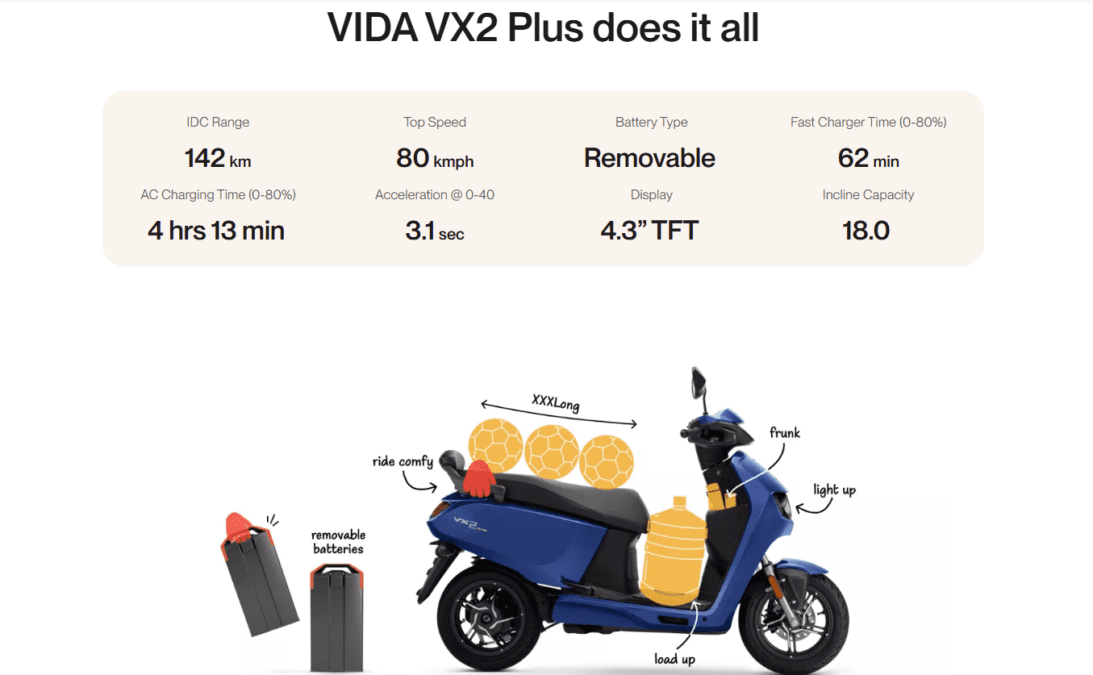
Price: ₹94,800 – ₹99,490 (ex-showroom, approx.)
Range: 142 km (IDC) | 100–110 km real-world
Top Speed: 80 kmph
Battery: 3.4 kWh (2 removable lithium-ion batteries)
Charging Time: ~5.4 hours (home socket) | Fast charge: 62 minutes
Best For: Daily commuters, apartment dwellers, families wanting Hero reliability
If you ask us to name one electric scooter under ₹1 lakh that gets everything right, it’s the Hero Vida VX2 Plus. And one feature alone explains why it’s the standout pick: the battery comes out.
Two removable 3.4 kWh batteries. Pull them out, carry them inside, charge them in your flat overnight. No need to run a wire to your parking lot. No worrying about outdoor charging safety. This single feature changes the ownership experience completely — and no other sub-₹1 lakh scooter gives you this level of flexibility at this price.
The range is real. Independent tests put the VX2 Plus at 100–110 km in real-world city riding — easily covering 5–6 days of daily commuting on a single charge for most Indian city riders. The 80 kmph top speed is comfortable for both city streets and city-limit stretches. The 7-inch touchscreen with Bluetooth navigation and geo-fencing feels genuinely modern.
Behind the VX2 is Hero MotoCorp — India’s largest two-wheeler company with over 7,000 service touchpoints. If something goes wrong, you’re never stranded far from help.
A BaaS (Battery as a Service) option is also available, which lets you buy the scooter without the battery at a significantly lower upfront price and pay for battery subscription instead — reducing the purchase price dramatically for buyers who want to test the waters.
What we love:
- Removable dual batteries — game-changer for apartment dwellers
- 142 km IDC / 100–110 km real-world range — best in class at this price
- 7-inch touchscreen, Bluetooth, geo-fencing — premium features
- Fast charging: 80% in 62 minutes
- Hero’s 7,000+ service network — unmatched reliability coverage
What could be better:
- On the pricier side under ₹1 lakh (₹94,800+)
- 80 kmph top speed — not for highway riding
- Heavy weight compared to some rivals
- Touchscreen can be slow to respond occasionally (software updates help)
Verdict: If you live in an apartment and range matters, the Vida VX2 Plus is the most practical, most reliable, and most feature-complete electric scooter you can buy under ₹1 lakh in India right now. Full stop.
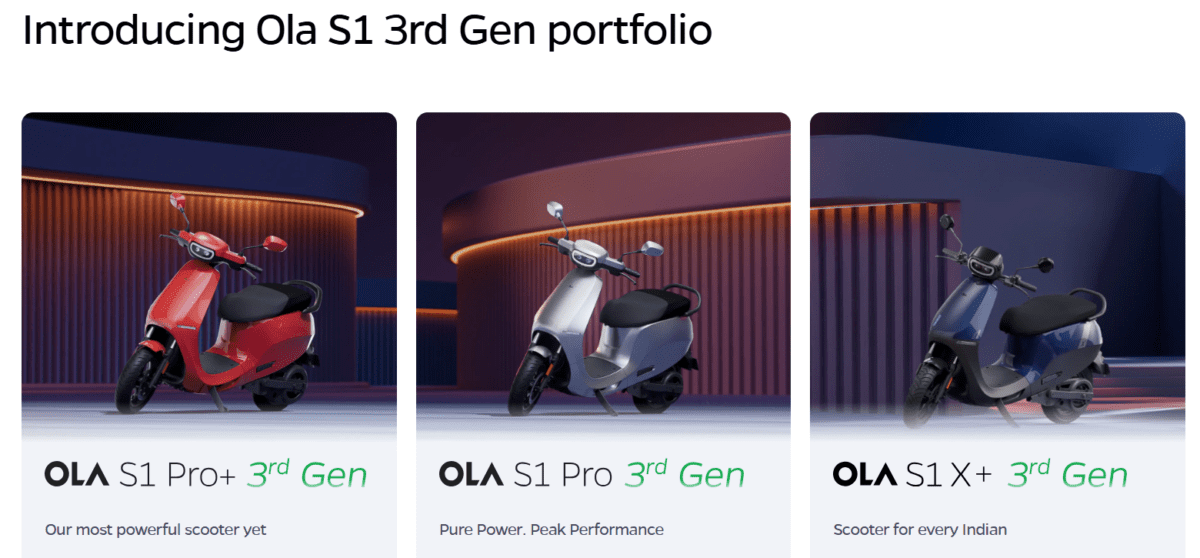
2. Ola S1 X (Gen 3) — Best for Tech Lovers and Young Riders
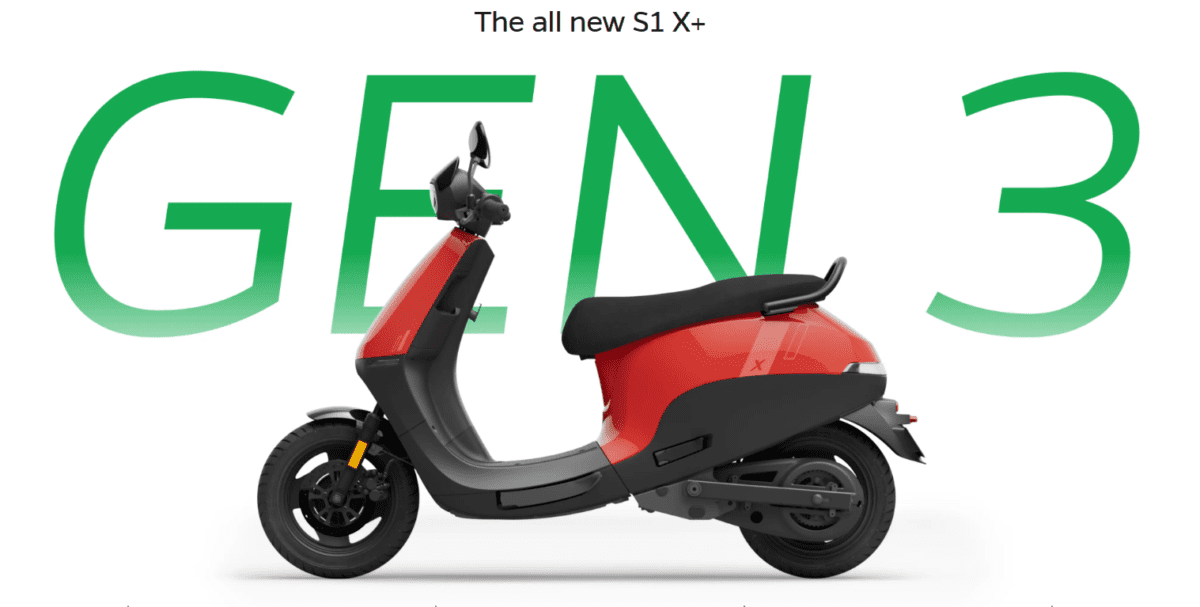
Price: ₹74,999 – ₹89,999 (ex-showroom, approx.)
Range: 108–150 km (IDC) | 80–110 km real-world (varies by variant)
Top Speed: 90 kmph
Battery: 2 kWh – 3 kWh (fixed)
Charging Time: 5–6 hours (home) | Hypercharger: ~45 min to 80%
Best For: Young riders, tech-forward buyers, Hypercharger network users
No brand has done more to make electric scooters feel exciting in India than Ola Electric. Love them or find their customer service maddening — and owners have felt both — the S1 X Gen 3 is genuinely impressive hardware at an increasingly reasonable price.
The 90 kmph top speed is the highest in this segment. The Gen 3 mid-drive motor delivers crisp acceleration that makes city gaps feel fun rather than functional. Multiple riding modes — Eco, Normal, Sports, Hyper — let you dial in the experience you want on that particular day. The interface is clean, the navigation works well, and the Hypercharger fast-charging network (now at over 10,000 points across India) is a real advantage if you live or work near one.
The 3 kWh variant is the sweet spot for most buyers — real-world range of around 100 km handles daily use comfortably, and the price at ₹84,999 feels well-positioned for what you’re getting.
A genuine caution though: Ola’s after-sales service has been inconsistent across cities. In metros, it’s improved significantly. In smaller cities, experiences can still vary. If you’re buying in a tier-2 city, check the nearest Ola service centre quality before committing.
What we love:
- Highest top speed in segment — 90 kmph
- Fun, sporty riding experience with multiple modes
- Competitive pricing — starts at ₹74,999
- Hypercharger fast-charge network across India
- OTA software updates — the scooter gets better over time
What could be better:
- Service experience inconsistent in tier-2 cities
- Fixed battery — no removable option
- Software bugs occasionally (improving with updates)
- Resale value lower than legacy brand rivals
Verdict: If you’re young, tech-forward, live in a metro, and want the most exciting riding experience under ₹1 lakh — the Ola S1 X Gen 3 delivers. Just make sure your city has good Ola service before buying.
3. Bajaj Chetak C2501 — Best Build Quality Under ₹1 Lakh
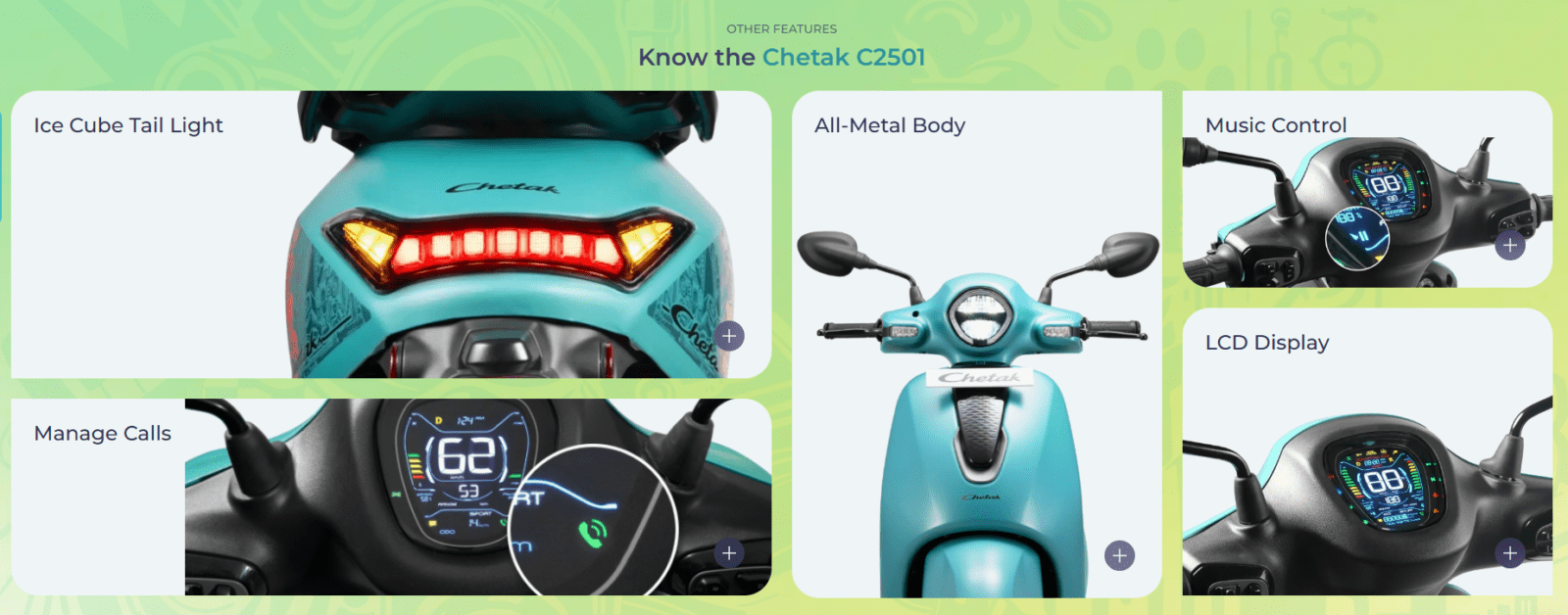
Price: ₹91,399 (ex-showroom, approx.)
Range: 113–127 km (IDC) | 85–100 km real-world
Top Speed: 60–65 kmph
Battery: 2.2 kWh (fixed, metal-cased)
Charging Time: ~5 hours (home socket)
Best For: Buyers who prioritise build quality, traditional design lovers, safety-conscious riders
The Bajaj Chetak is a different kind of electric scooter. It doesn’t chase specs. It doesn’t shout about range numbers or top speeds. What it does instead is feel solid — the way a quality product feels when you press the panels, sit on the seat, and pull the brakes.
Launched in January 2026, the Chetak C2501 is the most affordable Chetak ever made. And it still carries the signature: a metal monocoque body. Not plastic. Not composite. Metal. In a world where most scooters — petrol and electric — are built with plastic panels that flex and creak over time, the Chetak’s metal shell is a genuine differentiator that you feel every single day.
IP67 rating means it’s fully waterproof — monsoon season is a non-event. Hill hold, all-LED lighting, and a reverse mode all come as standard. The Bajaj service network covers over 3,500 cities and towns — which means if something needs fixing, someone near you can fix it.
The 60 kmph top speed is a deliberate choice — this is a city scooter, not a highway machine. If your daily riding stays under 60 kmph and under 80–90 km, the Chetak C2501 is the most dependable, best-built option in this segment.
What we love:
- Only electric scooter under ₹1 lakh with a metal monocoque body
- IP67 waterproof — monsoon-proof ownership experience
- Hill hold, reverse mode, all-LED — all standard
- Bajaj’s massive 3,500+ city service network
- Timeless retro design that ages gracefully
What could be better:
- 60–65 kmph top speed — the lowest in this segment
- No removable battery option
- Heavier than rivals (134 kg)
- Compact dimensions limit floorboard space
Verdict: If you want the most solidly built, most dependable electric scooter under ₹1 lakh with the peace of mind of Bajaj’s service network — the Chetak C2501 is the answer. It’s the scooter you buy and stop worrying about.
4. Honda QC1 — Best for Honda Loyalists and Safety-First Riders
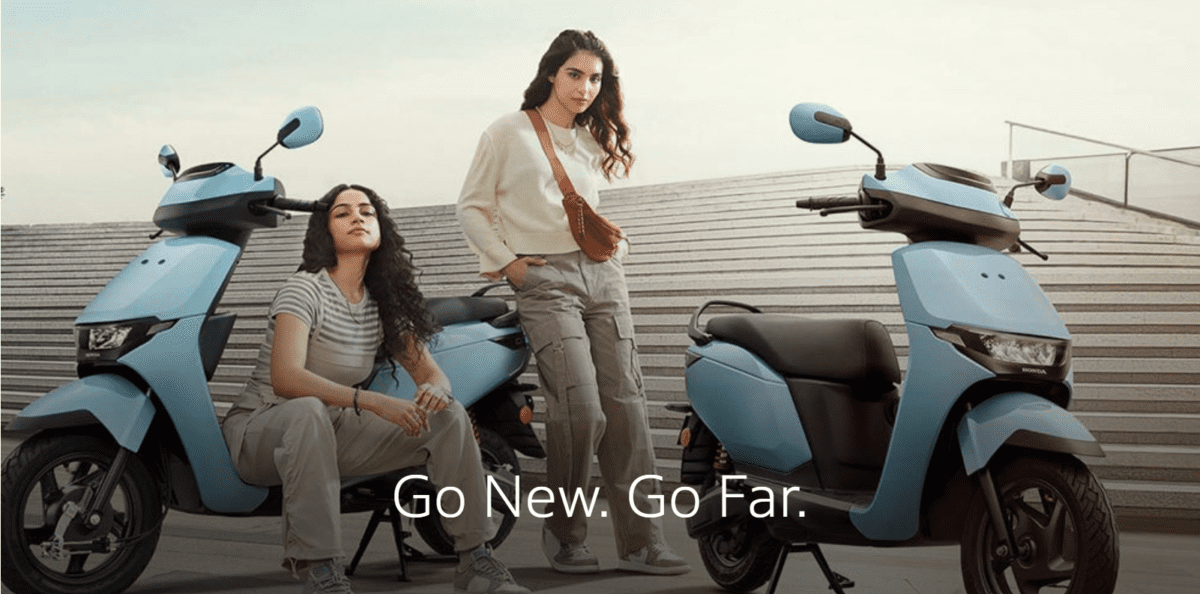
Price: ₹90,487 (ex-showroom, approx.)
Range: 102 km (IDC) | 75–90 km real-world
Top Speed: 50 kmph
Battery: Fixed lithium-ion
Charging Time: ~6.5 hours (home socket)
Best For: Honda loyalists, conservative riders, buyers who want Honda’s legendary after-sales support
Honda entering the electric scooter space was always going to be a big deal. The QC1 is Honda’s answer to the sub-₹1 lakh electric segment — and it’s exactly what you’d expect from the company that built India’s most trusted scooter: reliable, refined, no drama.
The QC1 doesn’t try to win a spec battle. It won’t be the fastest scooter, or the longest-range, or the most feature-loaded. What it offers is the Honda build quality, the Honda quality of components, and — crucially — access to Honda’s 10,000+ service network across India. That’s the widest service reach of any electric scooter manufacturer in this country. In a tier-2 city, in a smaller town, you will find a Honda service centre.
The riding experience is smooth and quiet — zero vibration, zero noise, city riding at its most stress-free. The disc brake gives confident stopping, and the overall scooter feels well-balanced and easy to handle.
The 50 kmph top speed and 75–90 km real-world range are honest numbers for a city commuter doing 25–40 km daily. Nothing more, nothing less.
What we love:
- Honda’s 10,000+ service touchpoints — most accessible in India
- Smooth, refined riding experience — quintessential Honda quality
- Excellent build quality and component reliability
- Great for conservative, first-time EV riders
- Strong brand resale value
What could be better:
- 50 kmph top speed — lowest on this list
- Real-world range (75–90 km) modest compared to Vida VX2
- Charging time (6.5 hours) longer than rivals
- Limited features compared to Ola or Vida
Verdict: Buy the Honda QC1 if Honda trust is non-negotiable for you and your primary need is a dependable, no-fuss city commuter with the best after-sales support in the country. It’s the most trustworthy pick on this list.
5. TVS Orbiter — Best Value for Sporty Young Riders
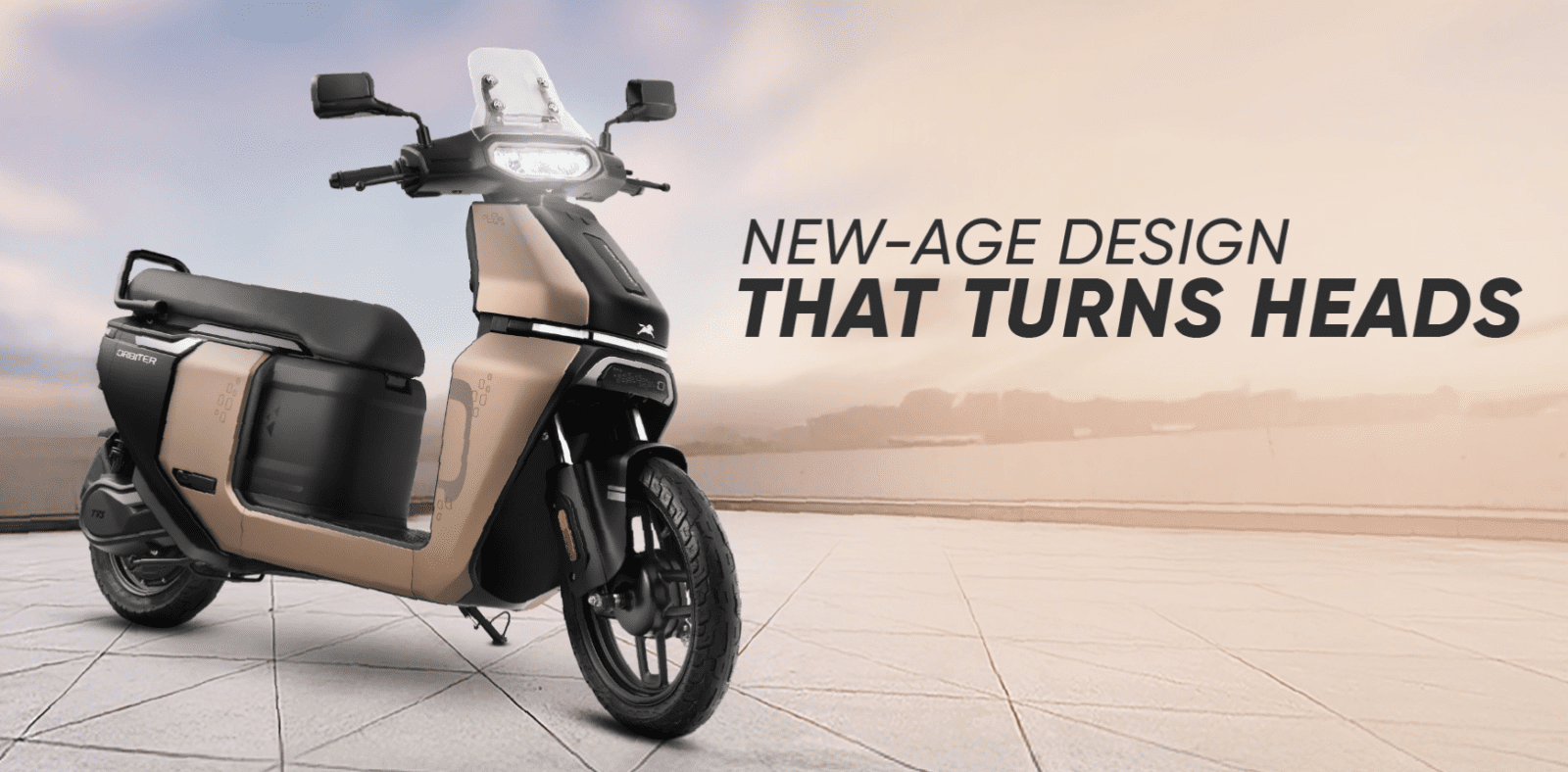
Price: ₹95,243 (ex-showroom, approx.)
Range: 86–100 km (IDC) | 70–85 km real-world
Top Speed: 82 kmph
Battery: Fixed lithium-ion
Charging Time: ~5 hours (home socket)
Best For: Young riders who want sporty looks + TVS reliability
TVS has been building quality two-wheelers in India for over six decades. The Orbiter is their entry into the sub-₹1 lakh EV space — and it brings the TVS signature: honest performance, good build, and reliability you can count on.
The Orbiter’s design divides opinion in the best possible way. It’s not trying to look retro like the Chetak, and it’s not trying to be a tech gadget like the Ola. It looks like a modern family scooter — clean, practical, and just young enough to turn a few heads. Real owners consistently rate it 4.5/5, praising the smooth ride and the confidence the TVS name gives them about long-term reliability.
The 82 kmph top speed makes it the second-fastest on this list — comfortable for both city riding and brief stretches on the outskirts. TVS’s service network is available in over 2,500 cities. Spare parts, trained mechanics, genuine components — the ownership experience after purchase is well-supported.
One consistent real owner note worth sharing: the V1 variant’s range can feel limited for longer daily commutes. If your daily ride exceeds 50 km, go for the V2 variant — it’s worth the slight premium.
What we love:
- 82 kmph top speed — excellent for city + outskirts riding
- TVS brand reliability — proven track record
- 14-inch front wheel — better stability on Indian roads
- Family-friendly design — wide appeal
- 2,500+ city TVS service network
What could be better:
- Real-world range (70–85 km) lower than Vida VX2
- No removable battery option
- Boot space is modest
- V1 variant range can disappoint longer commuters
Verdict: The TVS Orbiter hits a sweet spot for riders who want a sporty, well-built scooter from a name they’ve trusted for years — without crossing ₹1 lakh. The combination of 82 kmph top speed and TVS reliability is genuinely hard to argue with.
6. Ola S1 Z — Best Under ₹65,000
Price: ₹59,999 – ₹64,999 (ex-showroom, approx.)
Range: 123 km (IDC) | 80–95 km real-world
Top Speed: 70 kmph
Battery: 2 kWh (fixed)
Best For: Budget-first buyers, students, short-commute city riders
The Ola S1 Z exists to answer one question: what’s the cheapest electric scooter you can buy in India right now that isn’t a compromise on the basics?
At ₹59,999, it’s the lowest-priced scooter from a credible mainstream brand on this list. And for under ₹60,000, it gives you 70 kmph top speed and 80–95 km real-world range. For a college student or someone doing 20–25 km daily in the city, the S1 Z covers everything that matters.
It doesn’t have all the features of the S1 X — the riding modes are limited, the display is simpler, and the overall package is more basic. But the fundamentals are solid. Ola’s Gen 3 motor delivers smooth acceleration, and the Hypercharger network advantage applies here too.
If budget is the single most important filter and you’re willing to accept a simpler feature set, the S1 Z is extraordinary value.
What we love:
- Most affordable credible EV scooter — under ₹60,000
- 70 kmph top speed — respectable for the price
- 80–95 km real-world range — covers most daily commutes
- Hypercharger network access
What could be better:
- Limited features compared to S1 X
- Ola service inconsistency (same caveat as S1 X)
- Fixed battery — no removable option
Verdict: The most sensible budget EV buy for a student or light daily rider. At ₹59,999, nothing else from a mainstream brand comes close.
Quick Comparison — All 6 Electric Scooters at a Glance
| Scooter | Price | Real Range | Top Speed | Best Feature | Best For |
|---|---|---|---|---|---|
| Hero Vida VX2 Plus | ₹94,800–₹99,490 | 100–110 km | 80 kmph | Removable battery | Apartment dwellers |
| Ola S1 X Gen 3 | ₹74,999–₹89,999 | 80–110 km | 90 kmph | Fun ride + Hypercharger | Young/tech riders |
| Bajaj Chetak C2501 | ₹91,399 | 85–100 km | 60–65 kmph | Metal body + IP67 | Build quality seekers |
| Honda QC1 | ₹90,487 | 75–90 km | 50 kmph | Honda service network | Conservative buyers |
| TVS Orbiter | ₹95,243 | 70–85 km | 82 kmph | TVS reliability | Sporty family riders |
| Ola S1 Z | ₹59,999–₹64,999 | 80–95 km | 70 kmph | Lowest price | Students/budget buyers |
Note: All prices are approximate ex-showroom. On-road prices vary by city, state taxes, and registration charges. Real-world range depends on rider weight, road conditions, riding mode, and speed.
How to Choose the Right One for You
Still not sure which one to pick? Use this simple filter:
“I live in an apartment and need to charge at home without an outdoor socket”
→ Hero Vida VX2 Plus — only one with removable batteries. Non-negotiable choice.
“I want the most fun riding experience and live in a metro”
→ Ola S1 X Gen 3 — fastest, most tech-loaded, Hypercharger access.
“Build quality and metal body matter more than specs”
→ Bajaj Chetak C2501 — nothing else in this budget has a metal body.
“I want Honda trust and I’m not going above 50 km/day”
→ Honda QC1 — widest service network, Honda reliability.
“TVS is my brand and I want good value + sporty styling”
→ TVS Orbiter — 82 kmph, trusted brand, great urban package.
“I’m a student and my budget is under ₹65,000”
→ Ola S1 Z — best value from a mainstream brand under ₹60,000.
The Real Cost of Switching — Let’s Do the Math
A lot of people sit on the fence about switching to electric because the upfront price feels higher than a petrol scooter. Let’s settle this properly.
Petrol Scooter (Honda Activa-equivalent)
- Purchase price: ₹85,000
- Fuel cost: ~₹2.33/km at ₹105/litre at 45 kmpl
- Service cost (annual): ~₹4,000–₹6,000
- Monthly fuel spend (30 km/day × 30 days): ~₹2,100
Electric Scooter (Hero Vida VX2 Plus)
- Purchase price: ₹94,800
- Running cost: ~₹0.30/km on home charging
- Service cost (annual): ~₹1,000–₹2,500 (far fewer moving parts)
- Monthly electricity spend (900 km): ~₹270
The difference in monthly running cost: ₹1,830 saved
Break-even point (₹9,800 extra purchase price ÷ ₹1,830/month): ~5–6 months
After 5–6 months, every kilometre you ride on the Vida VX2 is money in your pocket instead of petrol stations. Over 3 years — you’ve saved ₹65,000+.
This is why 38% of all EV two-wheelers sold in India in FY25 were in the sub-₹1 lakh segment. The maths is unambiguous.
Things to Check Before You Buy — Don’t Skip These
1. Where will you charge?
The single most important question. If you have a parking spot with access to a power socket — or a removable battery option — you’re sorted. If not, factor in nearby public charging points.
2. What’s your daily distance?
Under 50 km/day: any scooter on this list covers you comfortably.
50–80 km/day: Hero Vida VX2 Plus or Ola S1 X 3 kWh variant are the safer picks.
Above 80 km/day: consider the Vida VX2 Plus or look at scooters above ₹1 lakh.
3. Check the service centre in your area
Before signing any booking form, locate the nearest authorised service centre and ask other local owners about their service experience. For Ola, this step is especially important.
4. Ride in multiple modes before deciding
Test drive in both Eco and Sport modes. The range difference between the two modes can be dramatic — 30–40 km difference on some scooters. Understanding which mode suits your riding style helps you set realistic expectations.
5. Government subsidies — check your state
Several states offer additional EV subsidies on top of the central FAME scheme. Delhi, Maharashtra, Gujarat, Tamil Nadu, and others have offered direct purchase incentives that can reduce your on-road price by ₹5,000–₹15,000. Always check the current subsidy status in your state before finalising the price.
Government Subsidies on Electric Scooters in India 2026
India’s EV subsidy ecosystem has evolved — and for buyers, it’s worth understanding what’s available.
At the central level, the PM E-DRIVE scheme replaced the earlier FAME-II program and continues to support electric two-wheeler purchases. At the state level, incentives vary significantly:
- Gujarat: Direct purchase subsidy available (check current status with dealer)
- Delhi: EV policy offers one of the most generous state incentive structures
- Maharashtra: Subsidies available; cap and eligibility criteria apply
- Tamil Nadu: 100% state GST refund for five years on locally assembled EVs in some categories
The key takeaway: always ask your dealer for the current applicable subsidies in your city before calculating the final on-road price. The effective price you pay after subsidies can be meaningfully lower than the sticker price.
Frequently Asked Questions
Q: Which is the best electric scooter under ₹1 lakh in India in 2026?
A: The Hero Vida VX2 Plus is the best overall pick — thanks to its removable dual batteries, 100–110 km real-world range, fast charging, and Hero’s national service network. For pure fun and tech, the Ola S1 X Gen 3 is the most exciting choice in this budget.
Q: What is the real-world range of electric scooters under ₹1 lakh?
A: Real-world range (which is always lower than IDC/claimed range) typically falls between 70–110 km for scooters in this segment. The Hero Vida VX2 Plus leads with 100–110 km real-world. The Honda QC1 and TVS Orbiter are at 70–90 km in real conditions.
Q: Can I charge an electric scooter at home?
A: Yes — all scooters on this list charge from a standard 5A home socket. A full charge takes 5–7 hours overnight. If you have a removable battery (Vida VX2 Plus only, in this list), you can carry it inside your apartment to charge — no outdoor socket needed.
Q: Which electric scooter under ₹1 lakh has the best service network?
A: Honda QC1 wins on service reach with 10,000+ touchpoints. Hero (Vida VX2) has 7,000+ touchpoints. Bajaj (Chetak) covers 3,500+ cities. TVS (Orbiter) has 2,500+ city presence. Ola’s network is growing but still inconsistent outside metros.
Q: Is it worth buying an electric scooter in 2026 or should I wait?
A: 2026 is genuinely one of the best times to buy. Battery technology has matured, real-world range is solid, brands are established, and the savings vs petrol start immediately. The break-even point is 5–6 months in most cases. Waiting for prices to drop further is unlikely to save more than switching now saves you in running costs.
Q: Which electric scooter is the most affordable under ₹1 lakh?
A: The Ola S1 Z starts at ₹59,999 — the most affordable electric scooter from a mainstream brand in India. For the absolute lowest price across all brands, budget EV brands like Komaki offer models from ₹34,999, but service network and long-term reliability should be factored in.
Q: Do electric scooters require a driving licence in India?
A: Yes, if your scooter has a top speed above 25 kmph — which all the scooters on this list do — a valid driving licence and vehicle registration are legally required. Low-speed EV scooters (under 25 kmph) are exempt, but they’re not covered in this guide.
The Bottom Line
The question used to be: Can India afford to switch to electric scooters?
In 2026, the better question is: Can you afford NOT to?
With petrol above ₹100/litre, with electric scooters from Bajaj, Hero, Honda, TVS, and Ola all available under ₹1 lakh, with charging becoming easier every month, and with a break-even point of less than 6 months on running costs alone — the case for switching has never been stronger.
Pick the Hero Vida VX2 Plus if range and removable batteries matter most. Pick the Bajaj Chetak if you want the most solid, dependable machine you can trust for years. Pick the Ola S1 X if you want excitement and smart tech. Pick the Honda QC1 if Honda trust is everything.
Whatever you pick — you’re making the right call by going electric. The only question is which electric.
Last Updated: May 2026 | Prices are approximate ex-showroom figures as of May 2026 and may vary by city, dealer, and applicable state subsidies. Always verify current pricing and available subsidies with your nearest authorised dealer before purchase.
Related Articles You Might Like
- Best Bikes Under ₹1 Lakh in India 2026 — Top Picks for Every Rider
- Best Mileage Bikes in India 2026 — Top 10 Picks
- Electric vs Petrol Scooter — Which Is Right for You in 2026?
- Hero Vida VX2 Plus vs Ola S1 X — Which Should You Buy?
- Bajaj Chetak vs TVS Orbiter — Full Comparison 2026
- Government EV Subsidies India 2026 — State-by-State Guide
- Best Electric Bikes Under ₹1.5 Lakh in India 2026