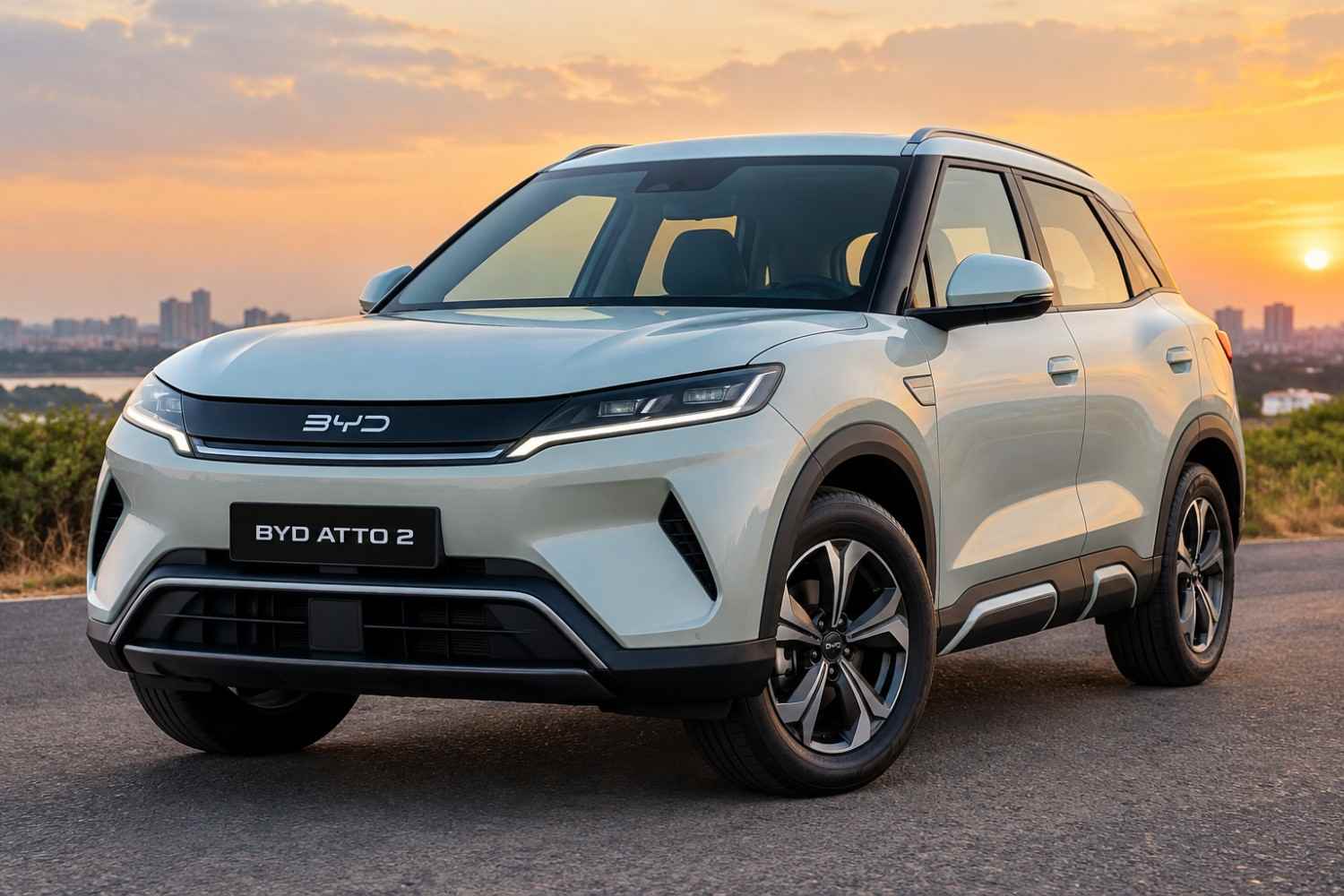
BYD Atto 2 India: Is This the Compact Electric SUV Gujarat Has Been Waiting For?
BYD Atto 2 is one of those cars that makes me stop scrolling for a second. Not because it is another huge ₹40–50 lakh electric SUV, but because it sits in the compact-SUV space where Indian families actually shop.
I still remember buying my first bike with hard-earned money. At that time, every rupee mattered. Even today, when I look at a new car, my first question isn’t “How many screens does it have?”
I ask, “How much will it cost me to live with this car for five years?”
That is the real Indian question.
Since starting ABTADKA in 2020, I have written about cars, bikes, technology, and the things ordinary Indian buyers actually worry about. Gujarat makes that calculation even more interesting. We have 40–45°C summer days, dust on village roads, humidity and salt-heavy air around the Bhavnagar coast, and plenty of highway driving between cities.
So when I look at the BYD Atto 2, I don’t just see another electric SUV.
I see a possible answer to the question: Can a relatively compact EV replace a petrol SUV for an Indian family without creating a new set of headaches?
And there is an important point before we start: the Atto 2 has not yet received an official India price/specification announcement from BYD, so figures such as ₹18–25 lakh should currently be treated as estimates, not confirmed showroom prices. The SUV has, however, been spotted testing in India.
Table of Contents
- What is the BYD Atto 2?
- Why is the Atto 2 important for India?
- BYD Atto 2 India launch and expected price
- What are the Atto 2’s battery and range figures?
- How powerful is the BYD Atto 2?
- What does the Atto 2 interior offer?
- Will the BYD Atto 2 handle Gujarat’s heat?
- What about battery life after 5–8 years?
- How expensive will the Atto 2 be to maintain?
- Atto 2 vs Atto 3 vs Creta Electric vs other EVs
- What should Indian buyers check before booking?
- Who should buy the Atto 2?
- Who should wait?
- Why trust ABTADKA?
- Frequently Asked Questions
- Bhavik’s Verdict
What exactly is the BYD Atto 2?
The BYD Atto 2 is a compact/subcompact electric crossover SUV developed by BYD Auto.
Here is where things become slightly confusing.
In China, the same basic vehicle is known as the BYD Yuan Up. In different international markets it has also been sold under names including Yuan Pro and S1 Pro. Wikipedia lists it as a B-segment, five-door SUV based on BYD’s e-Platform 3.0.
This matters because if you search YouTube or international websites for “Yuan Up,” “Yuan Pro,” or “Atto 2,” you may actually be looking at versions of the same vehicle.
The international Atto 2 is positioned below the larger BYD Atto 3.
For an Indian buyer, that positioning is interesting.
The Atto 3 is already a relatively premium EV. A smaller and potentially more affordable BYD could bring the company’s Blade Battery technology and EV experience into a much larger portion of the market.
Why am I watching the BYD Atto 2 so closely for India?
Because India’s electric-car market is changing.
A few years ago, an EV buyer often had to accept compromises in body size, highway ability, or charging infrastructure.
Now the situation is different.
We have electric SUVs, larger batteries, faster DC charging, and increasingly capable public charging networks.
The Atto 2 enters precisely where many Indian families want their next car to sit: compact enough for the city, but large enough for a family.
That makes the car relevant not only to EV enthusiasts.
It could appeal to someone currently considering a Creta-sized SUV and asking:
“Petrol mein ₹12–15 lakh kyun kharch karun jab main thoda aur invest karke EV le sakta hoon?”
That calculation will depend heavily on the final Indian price.
BYD Atto 2 India Launch: When Is It Coming?
This is where I want to keep expectations realistic.
The Atto 2 has been spotted testing in India, and current automotive reports expect an India launch during 2026. However, BYD has not yet publicly locked down the final India launch date and pricing in the sources available to me.
Autocar India’s current listing estimates the price at approximately ₹18 lakh to ₹25 lakh ex-showroom. Treat that as an estimate rather than a confirmed BYD price list.
And honestly, that ₹18–25 lakh window is huge.
At ₹18 lakh, the Atto 2 could be considered by buyers moving up from mainstream compact SUVs.
At ₹25 lakh, the buyer is entering a different part of the EV market.
So the final price will probably matter more than many individual features.
BYD Atto 2 Battery and Range: What Can We Expect?
The global Atto 2 has been sold with different battery and powertrain configurations depending on the market.
The European electric version initially used a 45.12 kWh BYD Blade Battery, with a claimed 312 km WLTP combined range and up to 463 km of claimed urban range. BYD also quotes a 130kW motor producing 290Nm.
There are also larger-battery versions internationally.
Wikipedia’s current technical summary lists EV battery capacities ranging from 32 kWh through 64.8 kWh depending on market and version.
This is why I would not simply write:
“Atto 2 has an X km range.”
That would be misleading for an India article before BYD announces the Indian configuration.
What does the range mean in real life?
This is where the Indian “Kitna deti hai?” mentality enters the EV world.
Instead of asking only:
“What is the claimed range?”
I would ask:
“How much range will I get on my actual route?”
Ahmedabad traffic, air-conditioning, highway speed, tire pressure, temperature, and driving style can all change consumption.
If you drive at 80–90km/h on a relatively open highway, your result can be very different from crawling through Ahmedabad traffic with the AC running hard.
And Gujarat’s summer is not exactly gentle.
Can the BYD Atto 2 Survive Gujarat’s 45°C Summer?
This is one of my biggest questions.
A brochure can show a beautiful SUV under studio lights.
My concern is what happens when the car sits outside at 45°C in Gujarat.
Battery temperature management becomes important for any EV.
The Atto 2’s global specifications include modern battery and thermal-management technology. The European EV version is also notable for offering a heat pump as standard, according to BYD.
But I want to make something very clear:
I would not claim that an India-spec Atto 2 has been personally tested by me in 45°C Gujarat conditions unless I actually perform that test.
That distinction is important for E-E-A-T.
Once an India-spec car is available, this is exactly the kind of testing I would want:
- Cold start after sitting overnight
- Battery percentage after a long highway run
- AC usage in peak summer
- Fast-charging speed when the battery is hot
- Range with four adults and luggage
- Range on dusty village roads
- Underbody clearance on rough roads
- Charging behavior after repeated highway runs
That’s much more useful to me than simply reading a brochure.
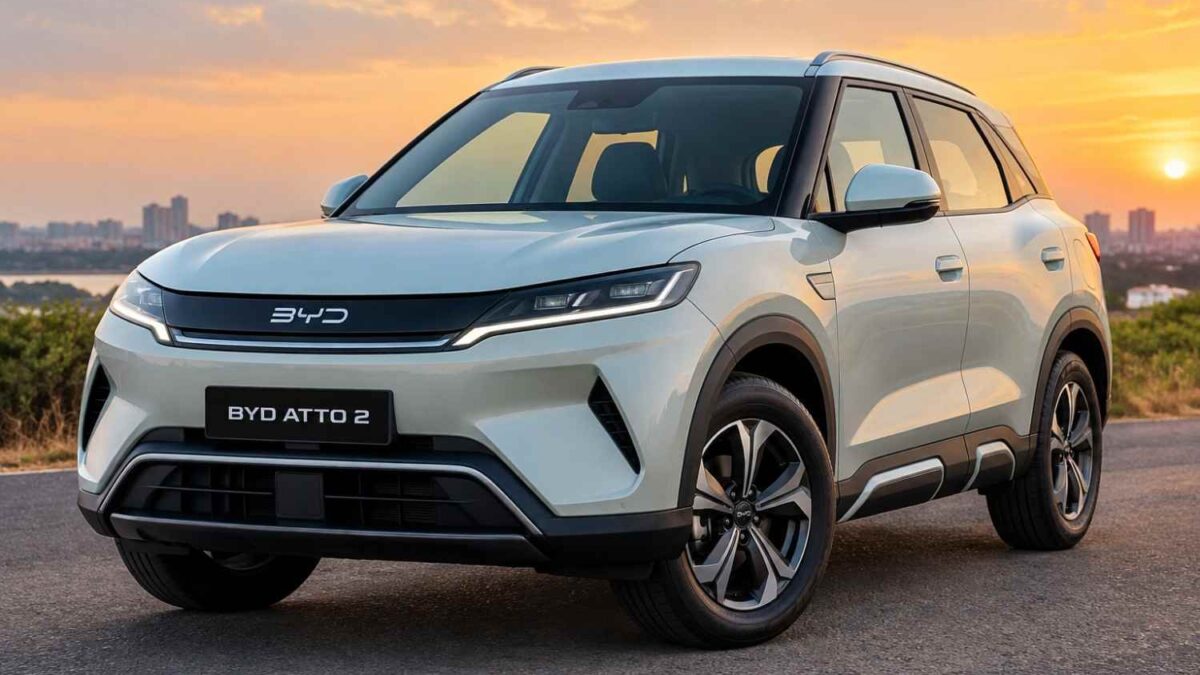
- BYD Atto 2 India: The EV SUV Everyone Is Watching
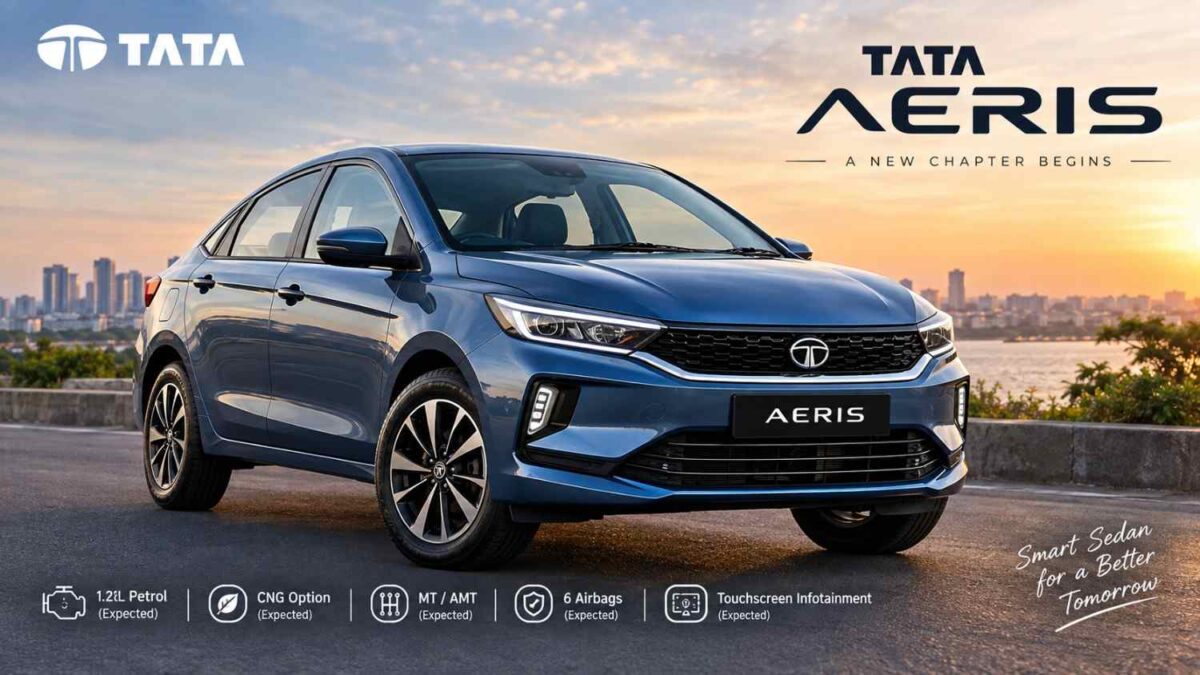
- Tata Aeris 2026: New Sedan, CNG, Price & Big Changes
How Powerful Is the BYD Atto 2?
The European electric version gets a 130kW front-mounted motor producing 290Nm.
BYD quotes 0–100km/h in 7.9 seconds for that configuration and a 160km/h top speed.
That is plenty for normal Indian driving.
I don’t need a compact family SUV to behave like a supercar.
What matters more is the instant response when joining a highway, overtaking a truck, or moving through a busy junction.
Electric motors have one major advantage here: Maximum torque arrives very quickly.
That makes an EV feel energetic even without a large petrol engine.
What About the BYD Atto 2 Interior?
The Atto 2 follows BYD’s modern cabin philosophy.
International versions have featured a rotating central touchscreen, digital driver’s display, ambient lighting, and USB Type-C connectivity. Autocar India’s current India-spec information also lists a 15.6-inch rotating touchscreen among expected features.
The rotating display is one of those features that looks like a gimmick until you actually use it.
For navigation, a landscape display can be useful.
For certain phone or media interfaces, portrait orientation can be more convenient.
But personally, I would put screen rotation far below these questions:
Are the seats comfortable?
Is the AC powerful enough for Gujarat?
How good is the rear-seat space?
Can my parents enter and exit comfortably?
That’s the stuff that matters after the first week of ownership.
Is the BYD Atto 2 Big Enough for an Indian Family?
The Atto 2 is approximately 4.31 metres long, 1.83 metres wide, and 1.675 metres tall, with a 2.62-metre wheelbase in the EV configuration.
That places it in a useful middle ground.
It’s not a tiny city EV.
It’s also not a giant seven-seater.
For a family of four, it should make sense on paper.
For five adults with luggage on a Bhavnagar-to-Ahmedabad trip, I would want to physically test the rear-seat width and boot before making a purchase recommendation.
International versions offer around 400 liters of luggage capacity, according to BYD’s European specifications.
What Does the BYD Blade Battery Mean for Long-Term Ownership?
This is probably more important than the rotating screen.
BYD uses its Blade Battery, based on lithium iron phosphate (LFP) chemistry, in the Atto 2.
The technology is one of the reasons BYD has built a strong identity around its battery systems.
For a middle-class Indian buyer, the bigger question is:
“What happens after my warranty period?”
We Indians don’t usually buy a car with the intention of throwing it away after two years.
If I spend ₹20 lakh or more on a car, I want it to remain useful for many years.
That means battery health matters.
How Do You Protect an EV Battery for 5–8 Years?
There isn’t a magical trick.
The same basic principle applies to EVs as to smartphones and other lithium-ion battery products: avoid treating the battery unnecessarily harshly.
My practical approach would be
1. Don’t chase 100% every day.
If your daily commute requires only 25–30% of the battery, there is little reason to charge to 100% every night unless the manufacturer specifically recommends it for that battery configuration.
For long journeys, obviously, charging to the required level makes sense.
2. Don’t make fast charging your only charging method.
DC fast charging is extremely useful on highways.
But for home charging, slower AC charging can be more convenient for overnight use.
3. Don’t leave the car sitting at an extremely low charge.
If you’re leaving the car unused for an extended period, follow BYD’s recommended storage procedure rather than parking it for weeks at an almost empty battery.
4. Watch tire pressure.
This sounds boring.
But tire pressure affects rolling resistance and therefore EV efficiency.
And on an EV, every bit of efficiency matters.
What Will Maintenance Look Like?
This is where EV ownership becomes interesting.
There is no conventional petrol engine oil to replace it.
There is no engine air filter in the traditional petrol-engine sense.
There is no spark plug.
There is no conventional multi-speed gearbox requiring the same type of maintenance.
But an EV is not maintenance-free.
You still have:
- Tyres
- Brake pads and discs
- Suspension components
- AC system
- Coolant/thermal-management components
- 12V electrical system
- Wipers
- Cabin filter
- Software
- Battery and high-voltage systems
And India’s roads are very good at finding suspension weaknesses.
A village road near Sihor with dust, potholes, and broken edges can tell you more about a car’s suspension than a showroom floor ever will.
My EV Longevity Routine for Gujarat Conditions
I don’t want to pretend I’ve completed a five-year Atto 2 ownership test.
But the maintenance philosophy I would follow is simple.
Every month
Check tire pressure.
Inspect the tires for uneven wear.
Clean dust from the wheels and underbody.
Check the charging cable and connector for damage or dirt.
Every few months
Have the car inspected according to BYD’s official service schedule.
Don’t ignore strange suspension noises.
Don’t ignore warning messages simply because the car is still driving normally.
During Gujarat summer
Try to park in shade when practical.
Use a windshield sunshade.
Don’t leave valuable electronics inside a closed, sun-baked cabin.
And most importantly, don’t assume that because an EV has fewer mechanical parts, it doesn’t need care.
BYD Atto 2 vs Atto 3: Which One Makes More Sense?
This comparison will depend heavily on Indian pricing.
The Atto 3 is larger and positioned higher.
The Atto 2 is smaller and should appeal to buyers who don’t need a bigger SUV.
| Feature | BYD Atto 2 | BYD Atto 3 | Petrol Compact SUV | Typical EV Rival |
|---|---|---|---|---|
| Powertrain | Electric | Electric | Petrol | Electric |
| Battery | Market dependent | Larger SUV battery | N/A | Market dependent |
| Drive | FWD in EV version | FWD/AWD depending on the market | FWD | Usually FWD |
| Maintenance | Lower mechanical complexity | Lower mechanical complexity | Engine + transmission | EV maintenance |
| Fuel cost | Electricity | Electricity | Petrol | Electricity |
| Expected India price | ₹18–25 lakh* | Higher | Varies | Varies |
| Best use | City + family | Larger family | Long-distance flexibility | Depends on model |
*Atto 2 India price is an estimate, not an official BYD India price.
A Simple 5-Year Ownership Logic
If your home has reliable charging, the Atto 2 becomes much more interesting.
BUYER PROFILE
     |
     v
Home charging available?
     |
   YES ---------------- NO
    |                   |
    v                   v
Daily city use       Dependence on
    |                public charging
    v                   |
Lower running-cost      v
potential            Check charging
    |                network first
    v
Atto 2 becomes       Don't decide
more practical       on price alone
This is why I would never tell someone to buy an EV simply because the brochure says “zero emissions” or because petrol prices are high.
Your charging situation matters.
What Could Be the Biggest Problem With the Atto 2?
For me, the first question isn’t battery range.
It’s after-sales support.
BYD has been expanding its presence in India, but buyers still need to consider service center availability in their own city.
If you live in a major city with an authorized BYD workshop nearby, your ownership experience may be very different from someone living far away from one.
For a buyer in Gujarat, I would specifically check:
Where is the nearest authorized BYD service center?
How far is it from my home?
What happens if the car develops a high-voltage system fault?
How quickly are replacement parts available?
These questions should be answered before you pay a booking amount.
What About the Atto 2 DM-i Plug-in Hybrid?
There is another interesting version.
BYD has also introduced the Atto 2 DM-i, a plug-in hybrid version in overseas markets.
BYD’s published specifications list a 1.5-liter petrol engine combined with electric drive, Blade Battery options of 7.8 kWh and 18 kWh, and system outputs of 166 PS and 212 PS depending on version. The Boost version has a claimed 90km WLTP electric range and up to 1,000km combined range under the published specification.
This could be particularly interesting for India because it addresses one major EV concern:
What if I want electric driving in the city but don’t want to worry about long highway trips?
However, an Indian launch and specification should not be assumed until BYD confirms it.
Should You Wait for the BYD Atto 2?
If you’re currently planning to buy a ₹15–25 lakh SUV, I would at least put the Atto 2 on your comparison list if the final Indian version launches within your budget.
But don’t book based on leaked prices.
Wait for:
- Official ex-showroom price
- India-specific battery capacity
- Certified range
- DC charging specification
- Warranty details
- Service-network details
- Insurance cost
- Ground clearance
- Real-world test drives
- Spare-parts availability
That’s the boring checklist.
And boring checklists save money.
Is the Atto 2 Practical for a Bhavnagar–Ahmedabad Trip?
This is exactly the type of test I would want to perform personally once an India-spec car becomes available.
I’d start from Bhavnagar.
I’d drive toward Ahmedabad with the AC running normally rather than trying to create a fake “maximum range” result.
I’d note the battery percentage.
I’d check charging availability.
I’d observe highway efficiency.
Then I’d return and compare the actual energy consumed with the car’s displayed figures.
That’s the sort of test Indian buyers need.
Not a 25 km dealership drive.
What Should You Check Before Buying Any EV?
Here is my simple checklist.
Check your daily kilometers.
If you drive 30–50km a day, even a moderate EV range can be very useful.
Check your parking.
Can you install a charger?
If you live in an apartment, get permission and electrical feasibility confirmed first.
Check highway routes.
Don’t assume every highway has a convenient fast charger.
Check service support.
This is especially important for newer brands or less common models.
Check insurance.
EV insurance can differ from petrol car insurance.
Check resale.
The EV market is changing quickly, so don’t assume today’s resale pattern will remain unchanged five years from now.
- BYD Atto 2 India: The EV SUV Everyone Is Watching
- Tata Aeris 2026: New Sedan, CNG, Price & Big Changes
Why Trust ABTADKA?
I started ABTADKA in 2020 because I wanted to write about technology, automobiles, and practical buying decisions in a way that felt like a conversation rather than a brochure.
Over the years, I’ve learned one thing:
The expensive part of buying a vehicle isn’t always the showroom price.
It is what happens after you take the keys home.
That is why I care about maintenance, running costs, heat, roads, charging, and long-term ownership.
I also don’t want to manufacture a “personal test” just to make an article sound impressive.
For the Atto 2, some of the India-specific information is still pending.
So I’m separating confirmed global specifications, current Indian reporting, and my own buyer-focused analysis.
That is what I believe trustworthy automotive writing should look like.
Frequently Asked Questions
Is BYD Atto 2 coming to India?
The Atto 2 has been spotted testing in India, and current automotive reports expect it to launch in India during 2026. However, the final launch date and India-specification details remain subject to BYD’s official announcement.
What will be the BYD Atto 2 price in India?
Current estimates place the Atto 2 around ₹18 lakh–₹25 lakh ex-showroom. This is an estimate and should not be treated as the official India price until BYD announces it.
What is the BYD Atto 2 range?
The international EV version has been offered with different battery configurations. The European 45.12 kWh version is officially rated for a 312 km WLTP combined range, while other versions and markets have different battery and range figures.
Does the BYD Atto 2 use a blade battery?
Yes. BYD’s Atto 2 uses its Blade Battery, with LFP chemistry, although battery capacity varies by market and powertrain.
Is the BYD Atto 2 better than a petrol SUV?
That depends on the buyer. An EV can offer lower energy and mechanical-maintenance requirements, but buyers must consider charging access, purchase price, service availability, highway usage, and expected resale value before comparing it with a petrol SUV.