TVS iQube vs Bajaj Chetak: Which Electric Scooter Should You Buy?
Abtadka explore TVS iQube vs Bajaj Chetak electric scooter comparison: check prices, real-world battery range, top speed, features, and specs to pick the right EV by ABT auto
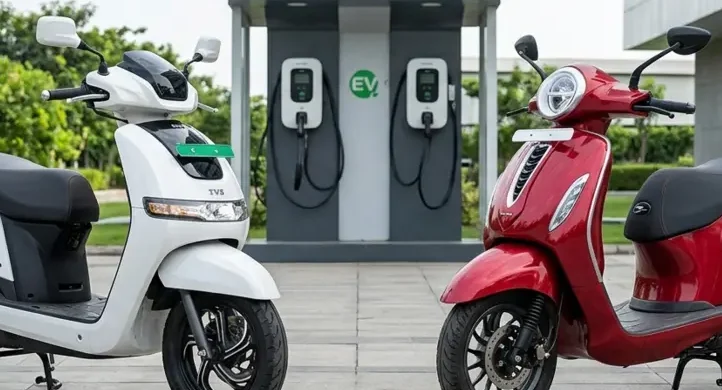
A Discover the Indian electric two-wheeler market right now, you are notice two iconic Indian automotive giants quietly dominating city streets: TVS and Bajaj , Instead of going after hyper-futuristic designs or extreme top speeds, both brands took a practical approach. TVS gave us the family-friendly iQube, while Bajaj revived nostalgia with its premium, all-metal Chetak Electric.
Abtadka says you are confused between these two reliable electric scooters, this detailed comparison covers everything from real-world range, battery capacity, and charging times to on-road pricing and features.
Design & Build Quality: Retro Charm vs. Modern Family Utility
Both scooters look premium, but their target audiences are slightly different:
Bajaj Chetak Electric: Brings iconic neo-retro styling with smooth curves, horseshoe-shaped LED lighting, and an all-metal body that feels built like a tank. It appeals to riders who love classic Italian-inspired aesthetics with modern fit and finish.
TVS iQube: Features a clean, contemporary design with sharp LED light bars. It looks like a traditional Indian family scooter—spacious, comfortable, and practical for riders of all ages.
Feature TVS iQube /Bajaj Chetak
Design Aesthetic -Modern & Minimalist Neo-Retro Premium -Body Construction High-Grade Fiber -Plastic -All-Metal Body Under-Seat Boot 30 to 32 Litres -Up to 35 Litres (C35 Series) Rider Ergonomics Upright – Wide Flat Floorboard -Upright-Slightly Compact Seat
Battery Range, Motor Power, and Performance
When buying an EV, range anxiety and motor punch matter most. Both brands offer multiple variants to match different commute lengths.
Battery & Performance Comparison
TVS iQube:
• Battery Packs: 2.2 kWh to 5.3 kWh
• Top Speed: 78 km/h to 82 km/h
• Real-World Range: 75 km to 150+ km
Bajaj Chetak:
• Battery Packs: 2.5 kWh to 3.5 kWh
•Top Speed: 55 km/h to 73 km/h
•Real-World Range: 90 km to 125 km
TVS iQube Performance:
Powered by a hub-mounted BLDC motor with 4.4 kW peak power, the iQube accelerates smoothly without sudden jerks. It is well-suited for pillion riding on flyovers and steep inclines. The higher-tier 4.7 kWh and 5.3 kWh variants comfortably offer real-world mileage over 140 km per charge.
Bajaj Chetak Performance:
The Chetak uses an mid-drive/hub setup generating 4.2 kW peak power. While its top speed is slightly lower (capped around 63–73 km/h depending on the variant), its low-end torque feels punchy off the line in Eco and Sport modes.
Smart Features & Technology
Both scooters come equipped with connected tech, but TVS edges slightly ahead in display technology.
TVS iQube Tech Highlights:
5-inch or 7-inch TFT color touchscreen display with joystick control.
Turn-by-turn navigation, geofencing, and incoming call/SMS alerts.
Q-Park Assist (Reverse Mode) and Hill-Hold Control.
OTA software updates via SmartXonnect app.
Bajaj Chetak Tech Highlights:
Digital LCD or Color TFT screen (variant dependent) with Bluetooth connectivity.
Sequential LED indicators and keyless ignition on top trims.
Reverse Mode, Hill-Hold Assist, and Remote Location Tracking.
Dedicated Chetak Smartphone App for ride stats and tamper alerts.
Also Read : Best Electric Scooters Under ₹1 Lakh in India 2026
Variant-Wise Price Comparison (Ex-Showroom)
Both TVS and Bajaj offer multiple trim levels to fit varying budgets:
| Scooter Model | Battery Size | Claimed Range (IDC) | Approx. Ex-Showroom Price |
| Bajaj Chetak C2501 | 2.5 kWh | 113 km | ₹96,500 |
| TVS iQube Base | 2.2 kWh | 75 km | ₹95,100 |
| Bajaj Chetak 3502 / C35 | 3.5 kWh | 153 km | ₹1.23 Lakh – ₹1.29 Lakh |
| TVS iQube 3.4 / 3.5 kWh | 3.5 kWh | 145 km | ₹1.10 Lakh |
| TVS iQube ST | 5.3 kWh | 212 km | ₹1.46 Lakh |
(Government subsidies and local state taxes will affect final on-road prices).
Pros & Cons:
TVS iQube
- Pros: Exceptionally smooth suspension, wider floorboard, high top-end range options, top-tier touchscreen interface.
- Cons: Fiber body panel construction feels conventional compared to metal competitors.
Bajaj Chetak
- Pros: Premium sheet-metal construction, timeless design, compact dimensions, generous 35L boot storage on newer 3.5 kWh models.
- Cons: Slightly lower top speed than rivals; fast-charging infrastructure is still expanding.
Frequently Asked Questions (FAQs)
Q1. Which electric scooter has a better real-world range?
If you select the top-tier TVS iQube ST (5.3 kWh), you can easily achieve 150+ km of real-world range per charge. For mid-segment models (3.5 kWh battery), both scooters offer a reliable 100–115 km real-world range in Eco mode.
Q2. How long does it take to fully charge the battery at home?
Using a standard 650W home charger, both scooters charge from 0% to 80% in approximately 3 to 4.5 hours.
Q3. Is metal body construction better for daily commutes?
The Bajaj Chetak’s metal body provides better protection against minor scratches and dents in crowded parking spaces. However, fiber body panels on the TVS iQube keep the overall weight lighter and are cheaper to replace if damaged.
abtadka Verdict:
ABT Says the TVS iQube if you want maximum ride comfort, a roomy floorboard for groceries or daily luggage, and higher top-speed capabilities for ring roads and highways. the Bajaj Chetak if you value classic styling, solid all-metal durability, high resale trust, and a compact footprint for maneuvering tight city streets by ABT.