Tata Punch 2026 Review: Is This Small SUV Still Worth Your Money?
There is something very Indian about buying your first car.
You don’t just buy a car. You think about EMI, petrol bills, insurance, service costs, family comfort, resale value, and that one question every uncle eventually asks:
I have been writing about automobiles and technology through ABTADKA since 2020, and I have learned one thing from talking to Indian buyers: most people don’t want a car that looks impressive for six months. They want something they can live with for years.
That is exactly where the Tata Punch becomes interesting.
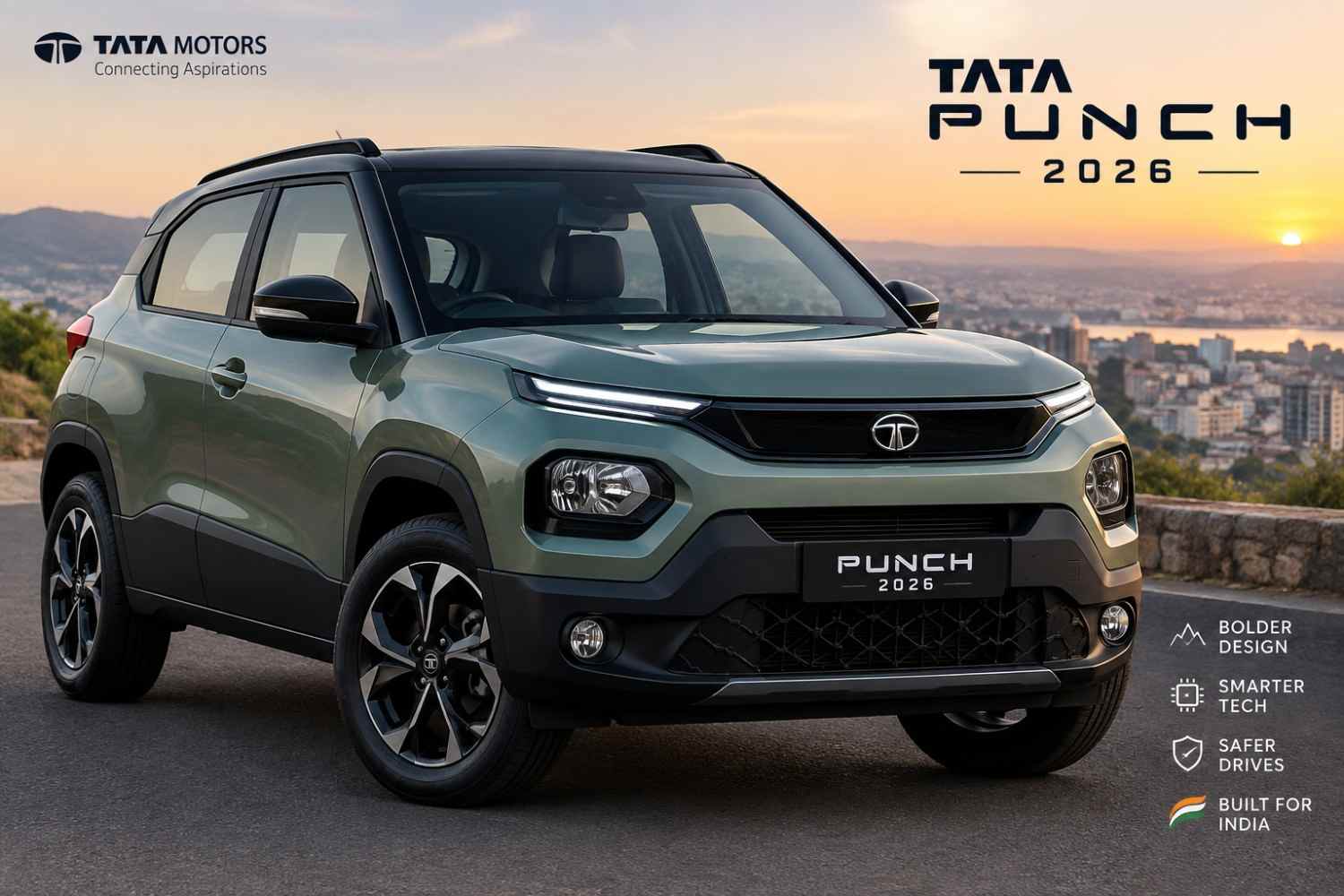
The Punch started life in 2021 as Tata Motors Cars’ small crossover city car, positioned below the Nexon. It uses Tata’s ALFA-ARC platform and shares its basic architecture with the Altroz. The 2026 facelift is a much more significant update than a simple cosmetic refresh, bringing a redesigned exterior, additional features, a new turbo-petrol engine, and, importantly for running-cost-conscious buyers, a CNG AMT option.
And yes, the Punch now has a Bharat NCAP five-star rating for the tested variants, with 30.58/32 for adult occupant protection and 45/49 for child occupant protection.
But should you actually buy one?
Let’s talk about it like we are sitting with cutting chai in Sihor—not like a showroom salesman.
Table of Contents
- Tata Punch 2026: What’s New?
- Tata Punch Price in India
- Is the Punch Really an SUV?
- Tata Punch Engine Options Explained
- Is the New Turbo Engine Worth It?
- Tata Punch CNG: Does It Make Financial Sense?
- Tata Punch Mileage: What Should You Actually Expect?
- Tata Punch Safety and Bharat NCAP Rating
- What Is the Punch Like on Bad Gujarat Roads?
- Tata Punch Interior and Features
- Is the Punch Good for a Family?
- Tata Punch Maintenance and Longevity Guide
- My Sihor-Style Monthly Car Maintenance Routine
- Tata Punch vs. Other Small Cars
- Who Should Buy the Punch?
- Who Should Save Their Money?
1. Tata Punch 2026: What’s Actually New?
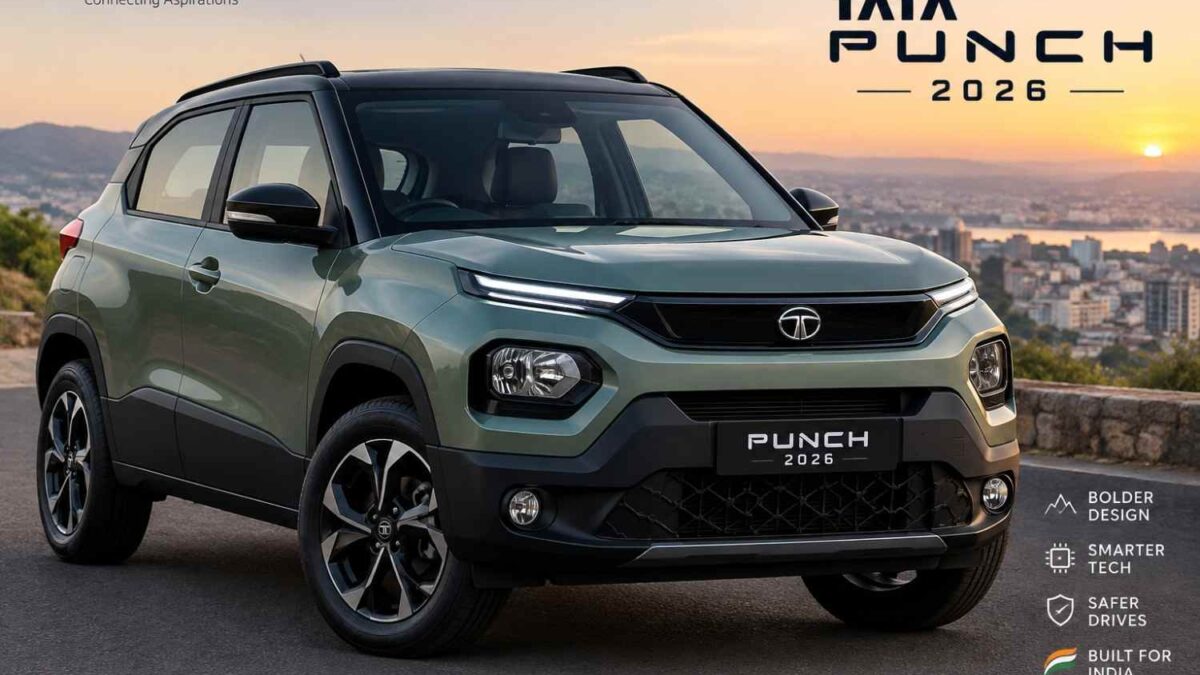
The first thing you’ll notice is that Tata has moved the Punch’s styling closer to the Punch.ev.
The front gets vertically stacked LED headlamps, revised daytime running lights, and a redesigned bumper. At the rear, the connected LED tail lamp treatment gives the car a wider visual appearance.
There are also redesigned 16-inch alloy wheels and new color options.
But I am less interested in cosmetic changes.
What matters to me is what changed underneath.
The 2026 Punch gets three powertrain choices: the existing 1.2-litre naturally aspirated petrol, a 1.2-litre turbo-petrol, and the 1.2-litre petrol-CNG setup. Depending on the engine, buyers can choose manual or AMT gearboxes.
- Tata Punch 2026 Review: The Small SUV Gets Serious
- Nissan Pixo EV: Expected Range, Features & India Launch Possibility
The biggest mechanical change is the turbo-petrol.
Tata has borrowed the 1.2-litre turbo-petrol from the Nexon family. It produces 120hp and 170Nm and comes with a 6-speed manual gearbox. Tata claims 0-100 km/h in 11.1 seconds.
That completely changes the personality of the Punch.
2. Tata Punch 2026 Price: How Much Does It Cost?
At launch, the 2026 Tata Punch started at ₹5.59 lakh ex-showroom and went up to ₹10.54 lakh depending on variant and powertrain. Current market listings can differ because of subsequent price revisions, dealer offers, and location-specific on-road costs.
The launch price structure looked approximately like this:
| Variant | Petrol MT | Petrol AMT | CNG MT | CNG AMT | Turbo MT |
|---|---|---|---|---|---|
| Smart | ₹5.59 lakh | — | ₹6.69 lakh | — | — |
| Pure | ₹6.49 lakh | — | ₹7.49 lakh | — | — |
| Pure+ | ₹6.99 lakh | ₹7.54 lakh | ₹7.99 lakh | ₹8.54 lakh | — |
| Adventure | ₹7.59 lakh | ₹8.14 lakh | ₹8.59 lakh | ₹9.14 lakh | ₹8.29 lakh |
| Accomplished | ₹8.29 lakh | ₹8.84 lakh | ₹9.29 lakh | — | — |
| Accomplished + S | ₹8.99 lakh | ₹9.54 lakh | — | ₹10.54 lakh | ₹9.79 lakh |
These were the launch ex-showroom prices reported in January 2026, so check the current Tata dealer quote before making a purchase.
For Gujarat buyers, I would never calculate the budget using ex-showroom price alone.
Add registration, insurance, accessories, and financing costs before deciding whether the EMI is comfortable.
3. Is the Tata Punch Really an SUV?
This is where Indian car conversations become funny.
Someone sees 193mm ground clearance and says, “SUV.”
Someone else sees the compact dimensions and says, “It’s basically a hatchback.”
Technically, the Punch is described as a subcompact crossover SUV/crossover city car, and its proportions are deliberately designed to combine small-car dimensions with SUV-like seating and ground clearance.
And honestly, that is what matters in daily life.
You get a relatively upright driving position, compact exterior dimensions, and 193 mm claimed ground clearance on the facelift.
That combination makes sense for Indian cities where one road can be smooth one minute and look like a mini off-road trail the next.
For someone driving around Sihor, Bhavnagar, Ahmedabad, or similar roads, I would value that clearance more than having an unnecessarily large SUV.
- Tata Punch 2026 Review: The Small SUV Gets Serious
- Nissan Pixo EV: Expected Range, Features & India Launch Possibility
4. Tata Punch Engine Options Explained
The Punch now gives buyers three distinct personalities.
1.2-liter naturally aspirated petrol
The standard petrol engine produces around 88 hp and 115 Nm.
It can be paired with a 5-speed manual or 5-speed AMT.
This is the sensible city option.
Don’t expect sports-car acceleration.
If your daily routine is office → market → home → family outing, it does the job.
1.2-litre turbo-petrol
This is the interesting one.
With 120hp and 170Nm, the turbo gives the Punch substantially more performance. It comes with a 6-speed manual gearbox.
If you regularly drive on highways or carry four adults and luggage, this is the engine I would pay attention to during a test drive.
But remember: more performance generally means more fuel consumption.
1.2-liter CNG
The CNG version produces approximately 73hp and 103Nm in CNG mode.
The important change for 2026 is that Tata now offers a CNG AMT combination as well.
This is the option for the person whose calculator comes out before the heart gets involved.
And I respect that.
5. Is the New Punch Turbo Engine Worth Paying More For?
If you have driven the older naturally aspirated Punch and thought, “Nice car, but I wish it had more power,” Tata has heard you.
The 120 hp turbo makes the Punch much more interesting.
But there is one important catch.
The turbo is manual-only.
So if your priority is effortless city driving, you cannot combine the turbo engine with an automatic gearbox.
For a driving enthusiast, that is not necessarily a problem.
For someone stuck in Ahmedabad traffic every morning, it may be.
This is one of those cases where the “better” specification depends completely on how you drive.
6. Tata Punch CNG: Does It Make Sense for Indian Families?
Now we reach the most practical part.
Fuel costs.
The Punch CNG is rated by ARAI at up to 26.99 km/kg, although real-world consumption varies with traffic, load, tire pressure, driving style, and air-conditioner usage.
Autocar India’s testing recorded 25.85 km/kg for the CNG manual.
The clever part is Tata’s twin-cylinder CNG arrangement.
Instead of sacrificing the entire boot to one large cylinder, the setup retains a usable 210-liter boot in CNG form. Petrol versions offer around 366 liters of boot capacity, according to published specifications.
For an Indian family carrying groceries, school bags, and weekend luggage, this is not a small detail.
7. Tata Punch Mileage: Don’t Believe Only the Brochure
This is where my “Kitna Deti Hai?” philosophy comes in.
ARAI figures are useful for comparison, but they should not be treated as a promise of your daily mileage.
Current published figures put petrol efficiency around 18.8–20.09 km/l, depending on variant, while CNG goes up to 26.99 km/kg.
But independent testing tells another story.
Autocar recorded 13.2 km/l for the petrol manual and 13.8 km/l for the petrol AMT in its testing. Its long-term petrol punch averaged around 12 km/l during heavy city use.
That difference is exactly why I tell friends:
Never buy a car based only on brochure mileage.
If your monthly driving is high, calculate your fuel cost using a conservative real-world number.
8. Tata Punch Safety: What Does Bharat NCAP Say?
This is one area where numbers matter.
The 2026 Tata Punch received a five-star Bharat NCAP rating for the tested variants.
The official Bharat NCAP result records:
- Adult Occupant Protection: 30.58/32
- Child Occupant Protection: 45/49
- Tested vehicle: Punch Pure+ CNG AMT and Accomplished CNG MT
- Tested year: 2025
- Publication: 2026
The official Bharat NCAP information also lists safety technologies, including electronic stability control, side-head protection, and seat-belt reminders for the applicable Punch variants.
This distinction matters.
A crash-test rating applies according to the test and variant applicability listed by Bharat NCAP. It should not simply be interpreted as “every possible configuration was independently crash tested.”
That’s why I always tell readers to check the exact variant.
For a family car, safety should not be treated as a luxury feature.
9. How Does the Punch Handle Gujarat Roads?
Here is where a small SUV-like car starts making sense.
Gujarat has beautiful highways.
It also has broken village roads, construction patches, speed breakers, and dusty stretches that can test suspension components.
Then there is summer.
A car parked outside in 45°C Gujarat heat is having a much harder day than the same car sitting in a shaded parking lot.
And near the Bhavnagar coast, salt-heavy air and humidity add another environmental challenge.
The Punch’s 193mm ground clearance and compact dimensions are useful for these conditions. Tata also claims a 400mm water-wading capacity.
But don’t confuse ground clearance with permission to drive through deep flooding.
No small family car should be treated like a proper off-road machine.
10. Tata Punch Interior: Is It Comfortable Enough?
The facelift brings additional technology while retaining the Punch’s familiar upright cabin layout.
Depending on the variant, the equipment includes a 10.25-inch touchscreen, a digital driver’s display, wireless phone charging, and a 360-degree camera on higher versions.
But I wouldn’t choose a car purely because it has a big screen.
A screen doesn’t reduce your EMI.
A screen doesn’t improve your fuel bill.
And a screen certainly doesn’t make a bad driving position comfortable.
Spend at least 20–30 minutes in the actual variant you intend to buy.
Sit in the rear.
Put your family members inside.
Open the boot.
Then decide.
11. Is Tata Punch Good for a Family of Four?
For a small family, the Punch makes a lot of sense on paper.
Its compact dimensions make city parking easier while the upright shape gives it a more SUV-like driving position.
The 366-liter petrol boot is useful for normal family duties, while the CNG versions have 210 liters because of the CNG hardware.
But if five adults frequently travel long distances, don’t buy any car without testing the rear seat with those actual passengers.
Brochure dimensions cannot tell you whether your father will complain about knee room after two hours.
Your family can.
12. Tata Punch Long-Term Maintenance: How Do You Keep It Healthy?
This is the part I wish more car reviews included.
Indians often keep their cars for 7–10 years.
We don’t necessarily want to replace a perfectly working car every two years.
A good car becomes part of the family.
My Sihor-style philosophy is simple:
Preventive maintenance is cheaper than repair.
Check engine oil regularly.
Don’t wait for the warning light.
Check the level according to the manufacturer’s recommended procedure and service schedule.
Use the correct grade and specification recommended for your exact engine.
Don’t ignore the air filter
Gujarat dust can be brutal.
If you frequently drive village roads or construction-heavy areas, the air filter deserves attention.
A clogged filter can affect engine operation and efficiency.
Keep tires correctly inflated.
Underinflated tires increase rolling resistance and can affect handling.
Over-inflation isn’t the solution either.
Follow Tata’s recommended tire-pressure figures and adjust for the load/use conditions specified in the owner’s documentation.
Protect the paint.
This is especially important in Gujarat.
If your punch sits under the sun every afternoon, washing it regularly and using appropriate paint protection products can help preserve its appearance.
Don’t rub dry dust aggressively over the paint.
That is how tiny scratches start.
What About Chain Cleaning With Kerosene?
If you are coming here from one of my bike articles, you may be expecting the chain-cleaning section.
The Punch is a car, not a chain-driven motorcycle.
So don’t start pouring kerosene underneath it looking for a mythical motorcycle chain.
For the Punch, focus instead on:
- Engine oil
- Air filter
- Cabin filter
- Brake inspection
- Tyre condition
- Wheel alignment
- Battery health
- Coolant
- Wiper blades
- AC performance
- Suspension components
Always follow the manufacturer’s service schedule rather than creating an arbitrary maintenance interval.
13. My Sihor-Style Monthly Car Maintenance Routine
I like keeping maintenance simple.
Once a month, I would spend 15–20 minutes checking the basics:
1. Tyres
Look for unusual wear, cuts, or visibly low pressure.
2. Engine bay
Look for obvious fluid leaks or anything that looks out of place.
3. Lights
Check headlights, brake lights, and indicators.
4. Wipers
Gujarat dust and heat can harden rubber.
5. AC
Run the air conditioner and notice whether cooling performance has changed.
6. Battery
Look for warning signs such as slow starting.
7. Underbody
If you’ve driven through rough village roads, listen for new knocks or rattles.
This little routine won’t replace servicing.
It simply helps you notice problems before they become expensive.
- Tata Punch 2026 Review: The Small SUV Gets Serious
- Nissan Pixo EV: Expected Range, Features & India Launch Possibility
14. Tata Punch vs. Small Cars: What Does the Money Get You?
Rather than pretending one car is automatically perfect for everyone, I prefer looking at the characteristics.
| Vehicle/Powertrain | Typical Strength | Fuel/Running Focus | Approx. Price Position |
|---|---|---|---|
| Punch Petrol MT | Simple everyday use | Petrol | From ₹5.59 lakh at the 2026 launch |
| Punch Petrol AMT | Easier city driving | Petrol | From ₹7.54 lakh at launch for Pure+ |
| Punch CNG MT | High-running-cost focus | CNG | From ₹6.69 lakh at launch |
| Punch Turbo MT | Performance | Petrol | From ₹8.29 lakh at launch |
Launch prices shown above are ex-showroom and were published when the 2026 facelift was introduced; current prices can change.
The important thing is not simply which number is smallest.
It’s which powertrain matches your annual running.
Tata Punch Ownership Logic: Where Does Your Money Go?
Think of it this way:
                 YOUR PUNCH BUDGET
                       │
          ┌────────────┴────────────┐
          │                         │
      LOW RUNNING                 HIGH RUNNING
          │                         │
     Petrol MT/AMT             Consider CNG
          │                         │
          ▼                         ▼
   Simpler choice             Lower fuel-cost focus
          │                         │
          └────────────┬────────────┘
                       │
                 NEED PERFORMANCE?
                       │
                    YES ▼
                 TURBO MT
There is no magic answer.
The person driving 300 km a month has a different financial equation from someone driving 2,000 km.
Tata Punch Resale and 5-Year Thinking
I don’t like making fake resale-value promises because used-car prices depend on kilometers, condition, ownership history, accident record, city, fuel type, and market demand.
Instead, think about the factors that can influence resale:
5-YEAR OWNERSHIP FACTORS

Service history       ██████████
Accident-free body    ██████████
Tyre condition        ████████
Interior condition    ████████
Odometer reading      ███████
Paint condition       ███████
Number of owners      ███████
The lesson is simple.
If you think you may sell the Punch after five years, keep the invoices.
Don’t ignore small dents.
Don’t modify the electrical system unnecessarily.
Don’t abuse the clutch.
And don’t skip scheduled maintenance just because the car “still feels fine.”
One Important Thing I Would Check Before Buying
The Punch has grown considerably more capable, but don’t assume every variant feels identical.
The naturally aspirated petrol, CNG, and turbo engines have different personalities.
The AMT is designed for convenience rather than enthusiastic gear changes.
Autocar’s testing found that the AMT can shift slowly under heavy throttle, while gentle driving improves smoothness and efficiency.
So my advice is very simple:
Drive the exact variant before paying the booking amount.
Not a similar variant.
Not your friend’s punch.
The exact engine + gearbox combination you are going to buy.
15. Who Should Buy the Tata Punch?
I would put the Punch on your test-drive list if you are:
A first-time car buyer
The compact size is easier to manage in cities.
A small family
The cabin and boot combination is practical for normal family use.
Someone dealing with bad roads
The high ground clearance is useful for broken surfaces.
A high-mileage driver
The CNG version deserves serious consideration if your local CNG availability is good.
Someone who wants more performance
The new 120 hp turbo is significantly more interesting than the naturally aspirated engine.
16. Who Should Save Their Money?
I would pause before buying if:
You want a genuinely quick automatic
The 120 hp turbo is manual-only, while the AMT versions prioritize convenience rather than fast gear changes.
You regularly carry five adults on long highway journeys.
You should test the rear-seat comfort yourself before committing.
Your driving is extremely low.
If you only drive a few hundred kilometers a month, spending significantly more for a CNG configuration may not make financial sense.
You expect premium-car refinement.
The Punch is positioned as an affordable compact SUV/crossover.
Keep expectations realistic.